
Learn Basic Hebrew Language Online with Easy Lessons

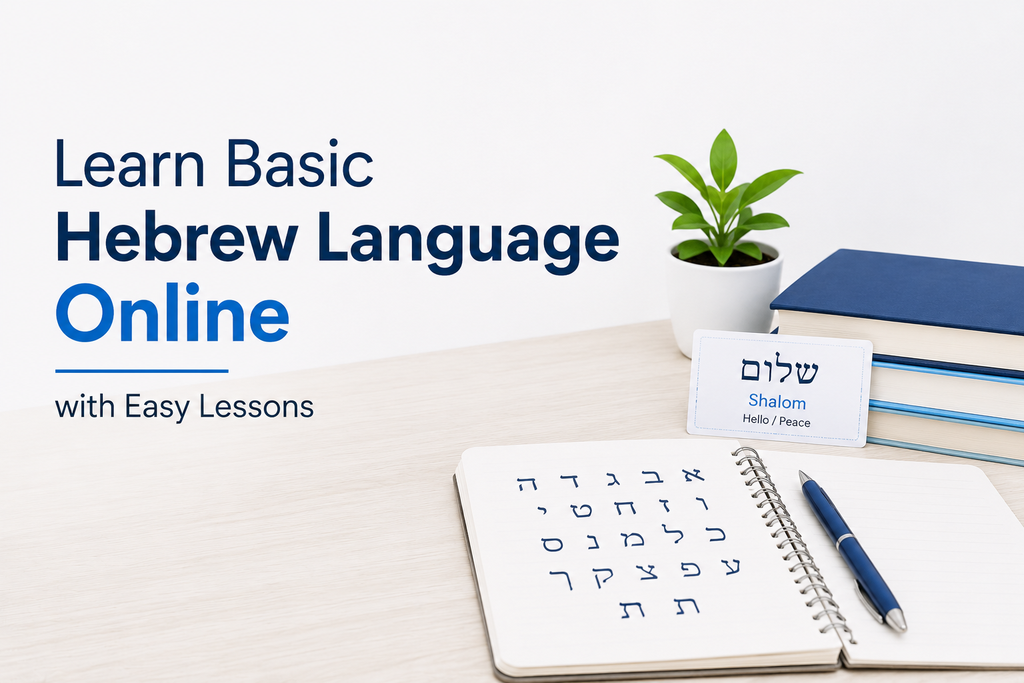
Learning a new language online can be a convenient way to build useful skills without attending a traditional classroom. However, beginners often find it difficult to know where to start. Hebrew has a different alphabet, reading direction, pronunciation and grammar structure, so learning everything at once can quickly feel overwhelming.
If you want to learn basic Hebrew language skills, the best approach is to start with the fundamentals and build your knowledge gradually. You do not need to memorise hundreds of words or understand advanced grammar before you can begin reading and using Hebrew.
With easy lessons, regular practice and a clear learning path, beginners can develop a strong foundation and gradually become more comfortable with Modern Hebrew.
Why Learn Hebrew Online?
Online learning gives beginners the flexibility to study when and where it suits them. Instead of depending on a fixed classroom schedule, you can practise Hebrew during the time you have available.
Online Hebrew lessons can also be more affordable than traditional in-person classes. Classroom courses may involve costs such as tuition, commuting, printed materials, and other learning expenses. With an online course, you can often avoid many of these additional costs while still having access to structured lessons and learning resources. This can make online learning a practical option for beginners who want to build their Hebrew skills while keeping their learning budget manageable.
For beginners, a good online learning program should make it easy to:
- Learn the Hebrew alphabet
- Understand basic pronunciation
- Build useful vocabulary
- Read simple Hebrew words
- Understand basic grammar
- Practise complete sentences
- Develop reading confidence
- Build skills gradually
The goal should not be to rush through lessons. It should be to understand each concept well enough to use it later.
Start with the Hebrew Alphabet
The Hebrew alphabet is one of the first things beginners need to learn.
Modern Hebrew uses 22 letters and is written from right to left. This can feel unfamiliar to someone who has only read languages that use the Latin alphabet, but it becomes easier with regular practice.
Instead of trying to memorise all the letters in one session, learn them in smaller groups. Pay attention to each letter’s shape and sound, then practise recognising it in different combinations.
Once the letters become familiar, reading Hebrew starts to feel much less intimidating.
Build Vocabulary Through Useful Words
After becoming comfortable with the alphabet, you can begin building your vocabulary.
Start with words that are useful in everyday situations rather than trying to memorise a large list of unrelated terms.
For example, beginners can learn vocabulary related to:
- Family
- Food
- Numbers
- Time
- Places
- Daily activities
- Common objects
- Greetings
It is also helpful to learn vocabulary in context. Seeing a word inside a sentence shows you how it is used and makes it easier to remember.
Understand Basic Hebrew Grammar
Grammar does not have to be the most difficult part of learning Hebrew.
Beginners can start with a few basic ideas and gradually add more as their understanding develops.
Important early concepts include:
- Basic sentence structure
- Personal pronouns
- Nouns
- Verbs
- Singular and plural forms
- Masculine and feminine forms
- Common prepositions
The important thing is to understand how these elements work together.
Instead of studying grammar rules separately from vocabulary, practise them through simple sentences. This helps you see how grammar functions in real communication.
Learn Hebrew Through Roots and Patterns
Hebrew has a useful root-and-pattern system that can make vocabulary easier to understand.
Many Hebrew words are built around roots, often consisting of three consonants. A root carries a basic meaning, while different patterns can create related words.
For beginners, learning this system can change the way vocabulary feels.
Instead of thinking that every new word is completely unrelated to the words you already know, you can begin looking for connections.
For example, when several words share a root, recognising that relationship can help you remember them more easily. Over time, this can make Hebrew vocabulary feel more organised and logical.
Learn Through Complete Sentences
Learning individual words is useful, but real communication happens through sentences.
This is why beginners should start practising complete Hebrew sentences as early as possible.
A simple sentence can help you practise several skills at once. You may recognise vocabulary, notice grammar, understand word order, and improve your reading ability in the same exercise.
| Learning method | What it helps you practise |
| Individual vocabulary | Word recognition and meaning |
| Grammar exercises | Language rules and structure |
| Hebrew roots | Connections between related words |
| Complete sentences | Grammar, vocabulary, and sentence structure |
| Short reading passages | Reading and comprehension |
| Regular review | Long-term retention |
This connected approach can make learning feel more natural because you are not treating every part of Hebrew as a separate subject.
Follow a Clear Learning Path
One of the biggest problems with learning online is having too many resources.
A beginner might watch one video about Hebrew verbs, use an app for vocabulary, read an article about grammar, and then try a completely different lesson. Each resource may be useful, but the overall learning process can become confusing.
A structured learning path removes much of that uncertainty.
When lessons follow a logical sequence, you know what to study next and why you are learning it. New topics can build on previous knowledge rather than appearing without context.
This also makes it easier to recognise your progress.
Practise a Little Every Day
You do not need to spend several hours studying Hebrew every day.
Short and consistent practice can be easier to maintain. Even 15 to 30 minutes can give you time to review previous material, learn something new, and practise reading.
You could divide your study time between:
- Reviewing familiar vocabulary
- Reading Hebrew letters and words
- Practising sentences
- Reviewing grammar
- Learning a new concept
The most important part is consistency. Regular contact with the language helps keep previously learned information fresh.
How Hebleo Makes Online Hebrew Lessons Easier
Hebleo was created to help beginners understand Modern Hebrew instead of relying on memorisation alone.
The course uses principles from Cognitive Science and years of one-on-one teaching experience to help learners create meaningful connections between grammar, vocabulary, Hebrew roots, sentence structure and reading skills.
Instead of presenting these topics as unrelated lessons, Hebleo follows a structured roadmap. Each lesson builds on previous knowledge while reinforcing important concepts along the way.
Students practise through complete Hebrew sentences, helping them understand how vocabulary and grammar work together in real communication.
Hebleo also introduces Hebrew roots and patterns early in the learning process. This helps learners recognise relationships between words and develop a more organised understanding of Hebrew vocabulary.
Another important part of the approach is spiral learning. Important concepts are revisited throughout the course instead of being taught once and forgotten. This gives learners additional opportunities to strengthen their understanding as they move forward.
The learning experience also includes community features. Students can connect with fellow learners, find study partners, ask questions, share their progress and receive support throughout their learning journey.
Final Thoughts
Learning Hebrew does not have to mean memorising long vocabulary lists or trying to understand complicated grammar from the beginning. A better starting point is to build your knowledge gradually.
Learn the alphabet, practise simple words, build useful vocabulary, understand basic grammar, explore Hebrew roots and patterns and begin reading complete sentences. Regular practice can then help turn those early skills into a stronger foundation.
If you want to learn basic Hebrew language skills online, choosing a course that focuses on understanding, structured lessons, sentence-based practice and consistent review can make the process easier to manage.
Hebleo brings these ideas together to help beginners develop a clear understanding of Modern Hebrew and continue building their skills with greater confidence.


Responses